Bangkok's Ari neighborhood is a one-hour specialty coffee education
City Guide · 4 min read
From the roaster that rewrote the Thai origin story to a coffee stand inside a weekend market, Ari gives you the full picture in under an hour.
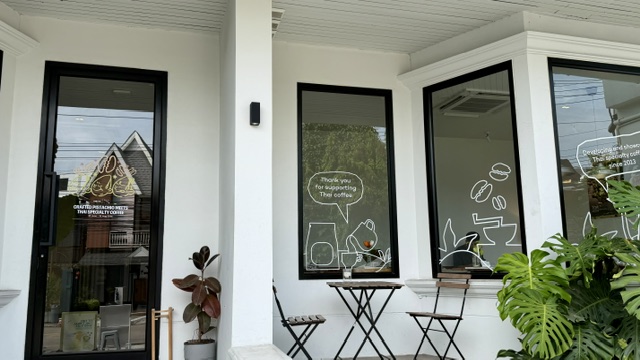
Step off the BTS at Ari and the city's usual assault dials back slightly. The sois here are tree-lined, the buildings mostly low-rise, and there's a street food cart on every corner selling things that have nothing to do with coffee. That last part matters. Ari grew up as a residential neighborhood before the specialty cafes arrived, and that order of events shaped everything about how the coffee culture here actually feels.
If you've spent time in Thonglor or Ekkamai, you'll notice the difference immediately. Those neighborhoods built their cafe scenes alongside their luxury retail and their rooftop bars, and the result is something polished and self-aware. Beautiful, often, but designed to be photographed. Ari's cafes arrived in shophouses and parking lot buildings and garden spaces, without the developer infrastructure. The people who opened them were, by and large, serious about coffee. The neighborhood let them get on with it.
What that means practically is that within a short walk from BTS Ari, you can trace almost the entire history of how Bangkok learned to take specialty coffee seriously. That's the education. Five stops. Around an hour.
Roots
Roots opened on Phahon Yothin Soi 7 in 2013, and if you want to understand Bangkok's specialty coffee identity, this is the right first cup. Founder Varatt Vichit Vadakan won Thailand's national barista championship in 2014 and used that platform to do something unusual: he turned Roots entirely toward Thai-origin beans. Not as a novelty, but as a mission. Every bag behind the counter comes from farms in Chiang Rai, Chiang Mai, or Nan. The Chiang Rai anaerobe natural is worth ordering on its own.
The Ari branch is a minimalist space with on-site roasting and a filter bar that doesn't fuss. You come here to understand what Thai terroir actually tastes like when someone cares enough to find out.
Nana Coffee Roasters
Nana Coffee Roasters is four minutes from Roots on foot, and the shift in register is immediate. The building is glass and timber with a garden out front and a two-story interior that feels considered without trying too hard. The team here holds a World Siphon Championship title from 2018, a National Barista Championship from 2019, and a National Brewers Cup from 2020. They wear this lightly. The menu runs to over thirty single-origin beans on rotation, including Geisha lots and yeast-fermented Colombians, but nobody is going to make you feel bad for ordering the house espresso.
What Nana shows you is what the ceiling looks like when the people behind the bar have competed at the highest level and decided to come home and open a neighborhood cafe. That combination is rarer than it should be.
Aribica
The building is small. The operation is smaller. Aribica runs a Slow Bar concept, which in practice means the barista will ask what you're in the mood for and have an actual conversation about it. They work with Amplify Coffee Roasters on bean sourcing, rotating mostly Thai microlots at prices that won't make you pause before ordering a second cup.
This is the cafe that reminds you what the neighborhood is actually for. Not a trophy stop. Not a destination for the algorithm. Just a good cup of coffee made by someone who wants to talk about it.
Casa Lapin
The Ari branch of Casa Lapin has been here long enough to feel like furniture. It's a larger space than the others, industrial aesthetic, wooden stools, the kind of place you could spend a whole afternoon without anyone suggesting you move on. Casa Lapin was among the first serious specialty operations in Bangkok, and this branch reflects a later, more comfortable version of the same idea. Single-origin drip stays the focus. Evenings bring craft beer.
It's the only stop on this walk that fully functions as an all-day neighborhood spot rather than a coffee destination with a narrow opening window.
Grafika
It sits inside Gump's Ari, a small community market on Soi Ari 4 that hosts vintage clothing, independent design vendors, and a coffee stand operating on its own schedule. Wednesday through Friday, mornings only. Weekends until five. Closed Monday and Tuesday. The signature drink is called The Rusty, coffee and orange juice, and it sounds like a mistake until you have it.
Grafika is not trying to be a destination. It's just there, behind the design tables, doing serious coffee work inside a market that smells like secondhand denim and street food. That combination is so specifically Ari that it almost explains the whole neighborhood on its own.
Bangkok has flashier coffee than Ari. It doesn't have a better argument.
The education is in the accumulation
What the hour gives you is not a ranking. It's a picture of a city that built its coffee culture from the ground up, neighborhood by neighborhood, through people who cared about the thing itself. You can get a better-designed room in Thonglor. You can't get a better education.