Third wave coffee had four birthplaces.
Deep Dive · 3 min read
Four cities, one term coined in San Francisco from observations of Norwegian barista culture, and a coffee scene in Melbourne that nobody was watching. The origin story is messier than anyone admits.
The question sounds simple. Where did third wave coffee start? San Francisco comes up most. Usually because of Blue Bottle. Sometimes because of geography, proximity to Silicon Valley, the sense that cultural movements either start there or end up there. It is a reasonable guess. It is largely wrong.
The honest answer is that third wave coffee has four separate origin points depending on which part of the movement you are talking about. And one of those origin points involves a barista competition in Oslo.
The term was born between two places
The phrase "third wave coffee" is most widely attributed to Trish Rothgeb, a roaster who later co-founded Wrecking Ball Coffee Roasters in San Francisco. She coined it in a 2003 article for the Roasters Guild newsletter, called "Norway and Coffee." The intellectual trigger was Norwegian coffee culture, which at the time was already doing things with specialty beans and barista craft that most of the American industry had not caught up to. The author was Californian. The observation was Scandinavian.
Neither place invented the movement. They named it.
Portland, Chicago, and Durham built the actual playbook
The three companies credited with creating the practices that define third wave coffee are Intelligentsia Coffee, founded in Chicago in 1995; Counter Culture Coffee, founded in Durham, North Carolina in 1995; and Stumptown Coffee Roasters, founded in Portland in 1999.
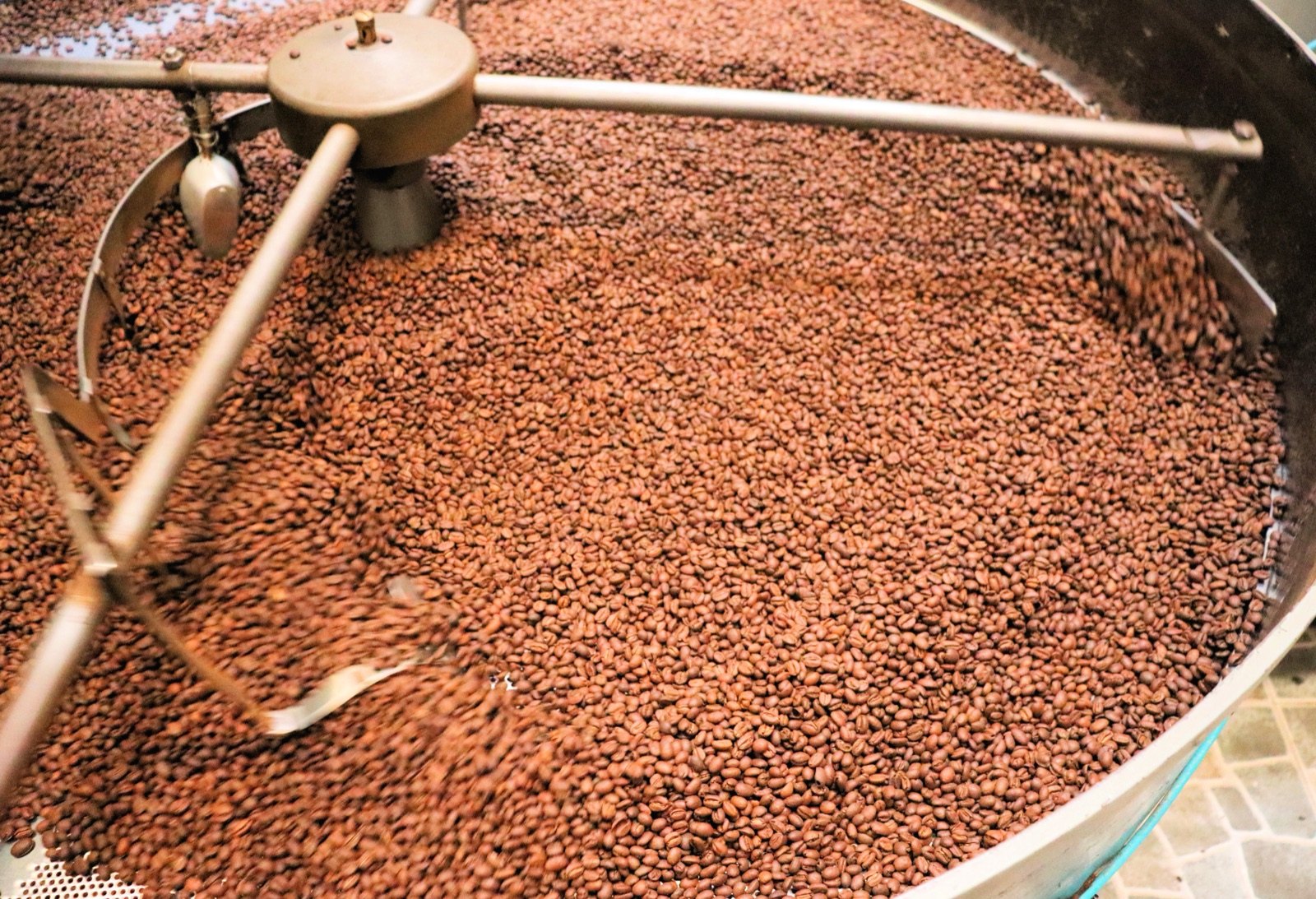
These are not brands that joined a movement. They created one from scratch, working independently and in parallel. Direct trade relationships with farmers rather than commodity brokers. Single-origin transparency on bags and menus. Small-batch roasting. Lighter roast profiles that let the character of the bean come through instead of the roast. Manual brewing methods that required attention rather than automation.
The pour-over you see in specialty cafes from Seoul to Lisbon traces back to three American cities that rarely come first in the conversation.
San Francisco scaled it
Blue Bottle Coffee, founded in Oakland in 2002 by James Freeman, became the first third wave company to raise serious venture capital. It brought the movement to a mainstream audience that was not already paying attention to roast profiles. San Francisco did not invent third wave coffee. It made it legible, fundable, and photographable in a way that changed who was paying attention.
Melbourne invented something else entirely
In 2005, St. Ali opened in South Melbourne and became one of the first cafes anywhere to build specialty coffee into the full hospitality experience: the space, the espresso program, the milk texturing, the sense that a cafe was somewhere worth spending actual time. The flat white as craft. Service as intention.
This is not the same movement as Chicago's direct trade model, and it did not develop from it. When London, New York, and Tokyo started building their own specialty scenes, many of them studied Melbourne for how the cafe experience should feel. They looked at Portland for how the roasting should work.
Who owns third wave?
Nobody, and that has always been the point.
The term came from observing Oslo and writing it down in San Francisco. The roasting and trading practices came from Chicago, Portland, and Durham. The scaling came from California. The espresso culture and cafe-as-place came from Melbourne. Every time someone credits one city, they are describing one thread in a story that was always distributed across people who were not coordinating.
Which is how most real movements start.
Two Tokyo rooms where the tradition holds.
- Streamer Coffee Company Azabujuban Steep PickAzabujuban, Minato · Tokyo · Steep Index 8.6/10
The two-time World Latte Art Champion's Azabujuban base where the exterior stops you on the street and the Streamer Latte kicks ass before you've finished deciding if it's your favourite cafe in Tokyo.
- KOFFEE MAMEYA Kakeru Steep PickHirano · Tokyo · Steep Index 8.7/10
The only cafe in Tokyo that asks you to make a reservation, and makes you feel, without question, that it was the right call.