Nobody flew to Madrid for the coffee. That is changing.
City Guide · 5 min read
Spain has one of the most embedded cafe cultures in the world, which made specialty coffee harder to introduce, and then made it more interesting to watch. Here is where the best of it is now.
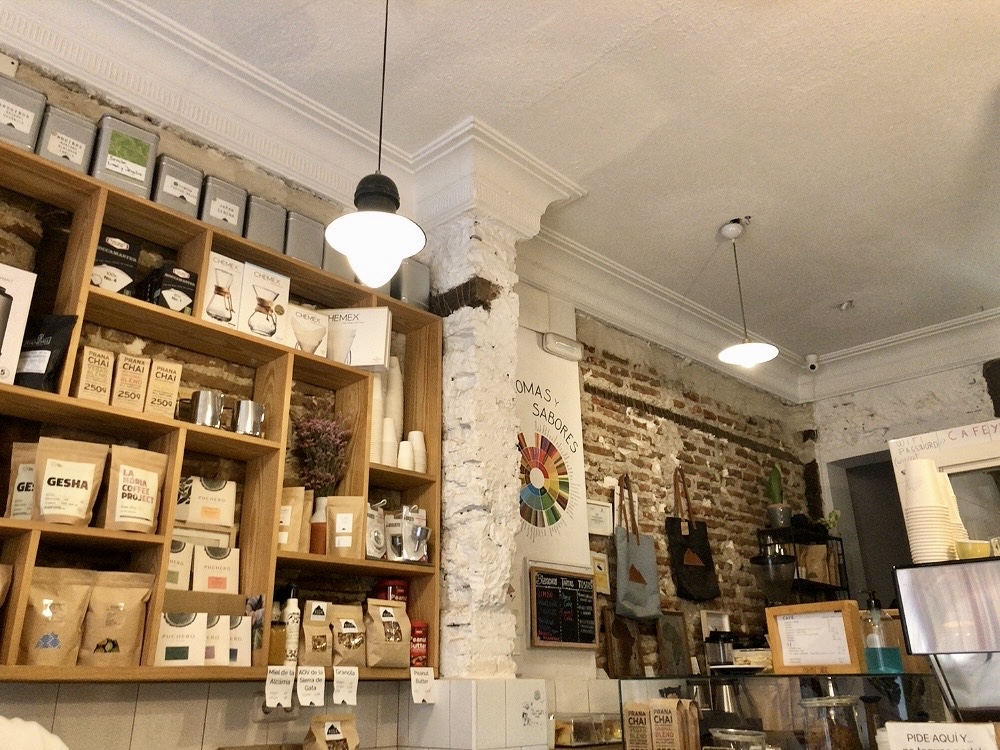
In most of Spain, ordering coffee is a fast transaction. You stand at the bar, you order a café con leche or a cortado, you drink it in three minutes, and you leave. The barista does not ask what grind setting you prefer. You did not come to discuss it. This is not a criticism of how Spanish people drink coffee. It is a description of a culture that has been confident in itself for a very long time.
Madrid's specialty scene arrived into exactly this, and it arrived carefully.
Toma Café opened in 2011 on Calle de la Palma in Malasaña, run by two people who had spent years in advertising and years flying to other European cities for decent coffee before deciding to make the thing they kept looking for. The room was small. The menu was short. The coffee was genuinely good in a way that the rest of the neighborhood had not been expecting. They did not make a performance of it.
The specialty cafes that have lasted in Madrid did not try to convert anyone. They just made better coffee and let the room figure itself out.
That early restraint shaped what came after. A decade on, the specialty scene in Madrid is less evangelical than Oslo, less busy than London, and considerably less self-conscious than Berlin. It has absorbed something from the city it sits inside: a conviction that the social function of a cafe matters as much as what is in the cup, and that you should be able to order a cortado without anyone making you feel like you have missed the point.
The neighborhoods worth knowing
Malasaña is where it started, and where the density is still highest. The streets around Calle de la Palma and the San Bernardo corridor have more specialty options per block than anywhere else in the city. It is the neighborhood where Madrid's creative class has concentrated for forty years, and the cafes there have the energy of a place that still has something to prove.
Conde Duque sits directly west of Malasaña and tends to get fewer visitors for the same quality of coffee. The streets are quieter, the buildings older, and the cafes there feel less like they need to announce themselves. Misión Café is here, and it is the best argument for crossing from one neighborhood into the other.
La Latina is different in character entirely. South of the center, it is the neighborhood of El Rastro, the flea market that takes over the streets on Sunday mornings and spills into the bars by noon. Ruda Café sits a few blocks from the market traffic. It is one of the more interesting specialty cafes in the city partly because nothing about its location suggests it should be there.
Goya and the Salamanca district to the east are the upscale barrios, where the cafes serve a different clientele and the interiors are correspondingly polished. Cero Coffee Roasters handles this territory well without losing the seriousness that makes specialty coffee worth seeking out in the first place.
Where to go
- Toma CaféMalasaña · Madrid · Steep Index 7.8/10
One of the original specialty roasteries in Madrid, running out of a small Malasaña room since 2011. The flat white is honest, the cinnamon pastry will cost you a second coffee, and the solo experience is better than most.
The evening
Madrid's cafe culture and its bar culture were always closely related. The city that drinks coffee standing at a bar in the morning is the same city that drinks wine and vermouth at noon and cocktails until three in the morning. The line between these things is not a line in Madrid so much as a gradient.
Salmon Guru, in Barrio de las Letras, is the argument for not going home after the last coffee. It operates in a former pharmacy a few streets from where Lope de Vega lived, and it is one of the better cocktail bars in Europe. The menu runs long and the room runs late. The clientele is not the same crowd from Misión Café at ten in the morning, but there is more overlap than you would expect.
What the city is now
Madrid is not trying to become the world's reference city for specialty coffee. The cafes worth visiting here are interesting precisely because they did not attempt to overwrite what was already there. The old cafe culture did not disappear. It just got better coffee.
You can order a cortado standing at the bar at Ruda Café, and nobody is going to look at you strangely. That sounds like a small thing. In specialty coffee, it is not.